Choosing the right golf cart is crucial for enhancing your golfing experience. When debating "is a 4 seater or 6 seater golf cart better?", expert John Smith, a seasoned golf cart dealer, emphasizes, “The choice depends on your specific needs and the type of courses you frequent.”
A 4-seater cart offers compact convenience, ideal for small groups or crowded courses. It's easier to maneuver and fits into tighter spaces. However, if you often golf with family or friends, a 6-seater may be the better option. This larger cart accommodates more passengers and provides extra space for gear.
However, a larger cart comes with its own challenges. It can be harder to navigate narrow paths or congested areas. Plus, fuel efficiency might suffer with extra weight. Evaluating these trade-offs requires critical thinking. Ultimately, the decision should reflect your playing habits and lifestyle preferences. Whether a 4-seater or 6-seater is ideal can only be determined through careful consideration.
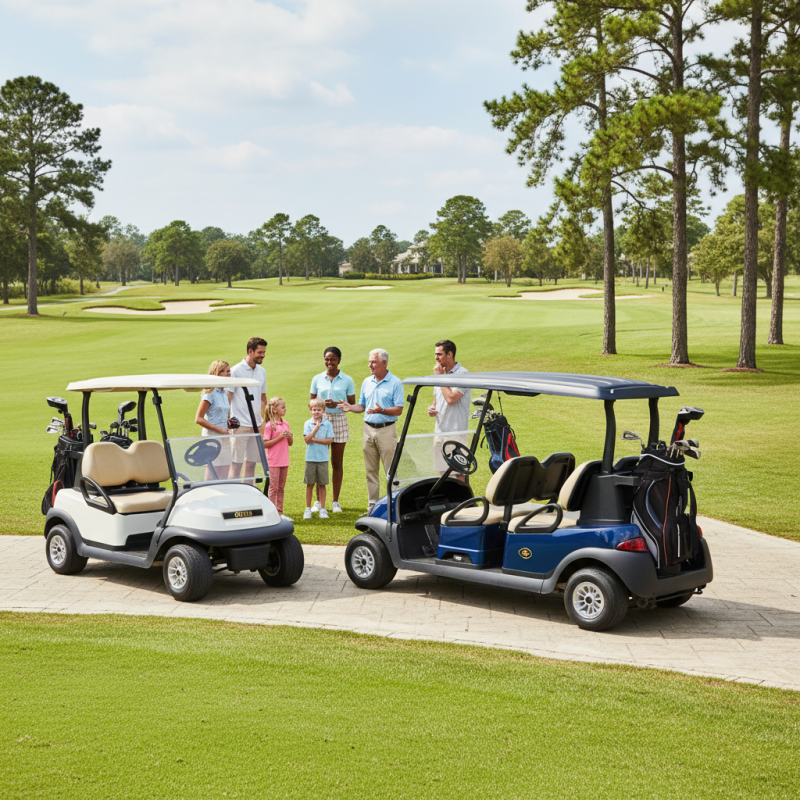
Choosing between a 4-seater and a 6-seater golf cart can be challenging. It's important to consider your specific needs. Start by evaluating the typical number of passengers you will transport. A 4-seater is perfect for small families or groups. It offers enough space for a couple of friends and their gear. On the other hand, a 6-seater is ideal for larger gatherings or events. It can accommodate your friends and family comfortably.
Storage space is another crucial factor. A 4-seater generally has more trunk space, making it useful for carrying golf bags or supplies. A 6-seater may have less room but can be configured with additional storage options. Think about where you will use the cart. Tight spaces may favor a smaller model, while open areas might accommodate a larger one.
Tips: Ensure you assess the weight capacity of both models. Overloading can lead to unsafe situations. Check if the cart has safety features that appeal to you. This consideration can greatly affect your experience. Finally, reflect on future needs. If you plan to expand your activities, it might be wise to invest in a bigger cart now.
When considering a golf cart for small groups, a 4-seater cart often emerges as an ideal choice. These carts are not just compact but also efficient. They are perfect for navigating tight spaces, such as crowded golf courses or small neighborhoods. A smaller cart can turn more easily and can be simpler to park. This practicality is crucial when time is limited.
Another advantage of a 4-seater golf cart is the ease of handling. With fewer passengers, the cart maintains a lighter weight. This can enhance battery life and increase range, allowing for longer rides without recharging. For casual outings, this efficiency is essential. Friends can enjoy a day out without the hassle of frequent stops to recharge.
While larger carts may seem appealing, they come with their own challenges. More seats mean increased weight and less maneuverability. Additionally, parking can become a headache. Reflecting on these factors can clarify the benefits of opting for a smaller cart. A 4-seater is often the best option for those prioritizing convenience and ease in their golfing experience.
When selecting between a 4-seater and a 6-seater golf cart, understanding capacity and space needs is crucial. Golf carts, primarily used on courses and in communities, must accommodate passengers comfortably. According to industry reports, a 4-seater cart typically offers 280-320 lbs of seating capacity. This is ideal for smaller groups or personal use. However, for families or small groups, exploring the 6-seater option may provide more comfort.
Space requirements are vital when choosing a cart. The turning radius and overall dimensions differ significantly between models. A 6-seater cart often measures 110-120 inches in length, while a 4-seater is about 92-105 inches. This affects maneuverability, especially in tight areas. Data shows that many users may underestimate the importance of space, leading to difficulties navigating when choosing a larger model.
Consider who will primarily use the cart. If transporting children and their gear, a 6-seater is more suitable. However, it requires more parking space. Using the wrong model can lead to overcrowding, affecting ride quality. Thoughtful consideration of capacity and space ensures the right choice, impacting enjoyment and functionality on the course.
| Dimension | 4 Seater Golf Cart | 6 Seater Golf Cart |
|---|---|---|
| Passenger Capacity | 4 People | 6 People |
| Length | 8 - 9 Feet | 10 - 11 Feet |
| Width | 4 - 5 Feet | 5 - 6 Feet |
| Weight | 500 - 700 lbs | 800 - 1000 lbs |
| Storage Space | Moderate | More Extensive |
| Ideal Use | Small Families & Close Circuits | Larger Groups & Longer Distances |
When considering the cost differences between 4-seater and 6-seater golf carts, it’s important to analyze your specific needs. Generally, 6-seater models come at a higher price point than their 4-seater counterparts. This is largely due to the additional space and weight capacity. A new 6-seater cart can cost up to 25% more than a 4-seater. However, the price varies widely depending on the brand and features.
Understanding maintenance costs is crucial. Larger carts often require more components and upkeep. Tires, batteries, and service can be pricier for 6-seaters. If you're on a budget, this is a factor worth considering. Additionally, think about insurance rates. A larger vehicle may cost more to insure, affecting your total expenditure.
Tips: Always check with multiple dealers to compare prices. Consider the resale value, as larger carts may have a better market demand. Think about your usage scenarios. Will frequent passengers make the 6-seater worthwhile, or is the 4-seater sufficient for your needs? Consider your priorities, whether it's space or savings, as you make your decision.
Choosing between a 4 seater and a 6 seater golf cart involves considering performance metrics like speed, range, and battery life. Typically, a 4 seater model excels in agility and is often lighter, which can lead to better speed on flat terrain. Conversely, a 6 seater, being heavier, may trade some speed for the ability to carry more passengers. It's crucial to analyze how these factors align with your needs.
Battery life is another critical aspect. A smaller golf cart might achieve around 25 miles on a single charge, while a larger cart could cover 20 miles due to increased weight. However, environmental conditions, like terrain and weather, play significant roles in actual performance. Reflecting on how often you plan to use the cart for longer trips can guide your choice.
Tips: Consider your typical routes. If you often take hilly paths, you may prefer a 4 seater for its nimbleness. Think about passenger needs. If you regularly travel with friends or family, a 6 seater could enhance your experience. Evaluate the ongoing costs. Battery maintenance varies between models and can impact overall ownership satisfaction.
: A 6-seater usually costs about 25% more than a 4-seater due to space and capacity.
Yes, larger carts often need more upkeep, which can increase costs for tires and batteries.
Insuring a larger vehicle like a 6-seater may be more expensive, impacting your total budget.
Focus on speed, range, and battery life. These factors can vary significantly between the two models.
Typically, a 4-seater is lighter and faster on flat ground compared to a heavier 6-seater.
A 4-seater might cover 25 miles, while a 6-seater may only manage 20 miles due to weight.
Environmental factors like terrain and weather can greatly affect their performance and efficiency.
Yes, think about how often you travel with others. A 6-seater can enhance group outings.
Larger models might have better market demand, making resale more favorable.
It depends on your usage. Reflect on whether the extra space justifies the increased costs.
When deciding if a 4 seater or 6 seater golf cart is better for your needs, several factors come into play. Small groups may find 4 seater golf carts advantageous due to their compact size, maneuverability, and often lower purchase costs. Understanding the space requirements and the typical number of passengers can help you determine the right fit.
Cost analysis indicates that while 6 seater models may cater to larger gatherings, they often come with a higher price tag. Moreover, performance metrics such as speed, range, and battery life can vary between models, influencing the decision further. Ultimately, carefully assessing your specific use case and preferences will guide you in choosing the best option for your golfing or leisurely outings.

Golvaris Car