When considering golf carts, people often ask, "what is the difference between ev golf cart and gas golf cart?" This question is important for golf enthusiasts and casual users alike. Electric and gas golf carts serve the same primary purpose but differ significantly in performance, maintenance, and environmental impact.
Electric golf carts rely on batteries as their power source. They offer quiet rides and lower operating costs. However, they have limited range and require time to recharge. In contrast, gas golf carts use internal combustion engines and can travel longer distances without needing to refuel. They tend to be more powerful and can handle hilly terrains better. Yet, they produce noise and emissions, which may deter eco-conscious golfers.
Understanding these differences can help users make informed choices. Each type has pros and cons. An electric cart might suit those prioritizing sustainability and cost. A gas cart may appeal to those needing robustness and convenience. Your choice ultimately reflects your needs and values on the course.
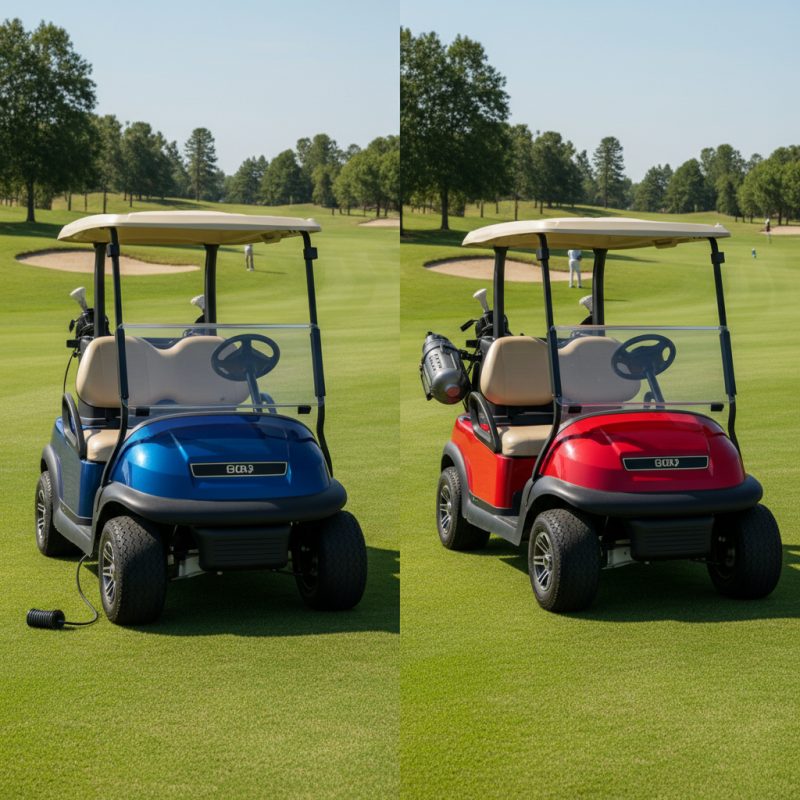
When considering golf carts, it’s essential to understand the differences between electric and gas options. Electric golf carts are powered by batteries, making them quiet and eco-friendly. They are ideal for short distances, often offering a range of 20 to 40 miles on a single charge. On the other hand, gas golf carts rely on internal combustion engines. They tend to have more power, making them suitable for hilly terrains and longer journeys.
Choosing between the two types can be challenging. Electric carts have fewer maintenance needs. However, battery lifespan is a concern. They typically last 3 to 5 years, depending on use and charging habits. Gas carts are more potent but can incur higher fuel and maintenance costs over time.
Tips: Consider your usage. If you plan to drive for extended periods, a gas cart might be best. For short, casual rounds, an electric option would suffice. Ensure you review local regulations too. Some areas restrict gas-powered models. Reflection on your needs is crucial before making a decision. Knowing your golf course layout helps determine which cart is right for you.
Electric golf carts are becoming popular due to their performance and minimal environmental impact. Research from the National Renewable Energy Laboratory shows that electric carts produce zero tailpipe emissions. This statistic is crucial, as climate concerns grow in today's world. In contrast, gas carts emit pollutants that contribute to air quality issues.
One significant benefit of electric golf carts is their efficiency. According to industry reports, electric carts can travel up to 40% further on a single charge than their gas counterparts can on a full tank. This efficiency not only saves on fuel costs but also minimizes the frequency of maintenance. Gas engines require regular oil changes and more complex repairs, while electric systems are simpler.
However, it's not all perfect. Electric carts may struggle in hilly terrains or extreme weather. Their performance can diminish in colder climates. Yet, advancements in battery technology are gradually addressing these issues. Some argue that the initial investment for electric carts is higher, but long-term savings can outweigh this expense.
When choosing between electric and gas golf carts,
power and range are key factors. Gas golf carts typically excel in both areas. They can reach higher speeds and provide
more torque, making them suitable for hilly terrain. This is important
for courses with steep inclines or tougher routes. Many users prefer the consistent performance of gas-powered engines.
The range of gas carts is another significant advantage. A full tank can often last a full day of play or even longer,
depending on the terrain. In contrast, electric carts require frequent recharging
and can run out of battery during use. This can disrupt your game, especially on larger courses.
However, it’s essential to consider maintenance. Gas engines
demand regular checks and fuel availability. This can be seen as a hassle or an extra cost. Electric carts, while
limited in range, require less maintenance. Users should weigh
their priorities. Are you looking for convenience or performance? Both have their merits, and personal experiences
can greatly influence the choice.
When comparing electric and gas golf carts,
maintenance and operating costs play a crucial role. Electric carts typically
require less maintenance compared to their gas counterparts. They have fewer
moving parts, which means fewer components that can wear out. This simplicity
can be appealing to many users. However, battery
replacement can be costly every 4 to 6 years. The need for proper
battery care may catch some users off guard.
Gas golf carts, while often seen as more powerful, demand regular maintenance
like oil changes and air filter replacements. Fuel costs also add up
over time. Users should monitor their cart’s fuel efficiency. Ignoring proper
maintenance can lead to higher costs in the long run. It's important to weigh
the long-term expenses against initial purchases.
Cost-effectiveness relies on usage patterns. Electric carts shine in
quieter environments, like residential golf communities, where range
isn't a primary concern. However, fuel availability
for gas carts can be a bonus for longer rounds. Users must reflect on
their needs and preferences, finding a balance that suits their lifestyle.
Electric and gas golf carts serve distinct purposes based on their operational environment. Electric carts are often preferred on smooth, flat terrain like golf courses or resorts. They produce zero emissions, making them ideal for eco-conscious venues. According to the Electric Drive Transportation Association, electric carts can operate at a lower cost per mile, averaging around $0.05 compared to gas at $0.20. This efficiency translates into reduced overhead for golf course management.
In contrast, gas golf carts shine in rugged terrains or longer distances. Golf courses with hilly landscapes benefit from gas models, which provide consistent performance. The advantage of broader fuel availability makes these carts more practical for extended use. However, they incur higher running costs and produce emissions. A study by the National Golf Foundation revealed that 35% of golf courses rely on gas-powered carts due to their reliability in demanding conditions.
Choosing the right golf cart depends on the specific needs of the course or property. Electric carts may require charging infrastructure, which might be a hurdle for some. Thus, it’s essential to weigh the installation costs against the long-term benefits. Accessibility to fuel and maintenance costs are also crucial factors for gas carts, influencing decisions made by operators.
| Feature | Electric Golf Carts | Gas Golf Carts |
|---|---|---|
| Power Source | Batteries | Gasoline |
| Running Costs | Lower | Higher |
| Noise Level | Quiet | Louder |
| Environmental Impact | Lower emissions | Higher emissions |
| Maintenance | Requires battery maintenance | Requires more frequent engine maintenance |
| Range | Limited to battery life, typically 30-50 miles | Greater range, typically over 100 miles |
| Best Usage Scenario | Short trips, closed communities, and quiet environments | Longer trips, rugged terrain, and scenarios requiring quick refueling |
| Initial Cost | Generally lower | Generally higher |
: Electric carts are battery-powered and quieter, while gas carts use internal combustion engines for more power.
Electric golf carts usually offer a range of 20 to 40 miles on one charge.
Electric carts need less maintenance but require battery replacements every 3 to 5 years, which can be costly.
Yes, gas carts require regular maintenance like oil changes and air filter replacements, which can increase costs.
Electric carts are ideal for smooth and flat terrains, such as golf courses or residential areas.
Gas carts are better for hilly terrains and longer distances due to their reliability and wider fuel availability.
Electric carts cost about $0.05 per mile on average, while gas carts cost around $0.20 per mile.
Users should reflect on their usage patterns, course layout, and local regulations impacting their choice.
Yes, gas carts provide consistent performance in rugged terrains but have higher running costs and produce emissions.
Users may need to consider the availability of charging infrastructure, which can be a hurdle.
When considering what is the difference between EV golf carts and gas golf carts, it's essential to evaluate their types, benefits, and usage scenarios. Electric golf carts are known for their quiet operation, lower environmental impact, and minimal maintenance costs. They excel in situations where noise reduction and eco-friendliness are priorities. On the other hand, gas golf carts deliver greater power and a longer range, making them preferable for larger courses or hilly terrains where sustained power is necessary.
In terms of maintenance and operating costs, electric carts generally require less upkeep, while gas carts may incur higher fuel and maintenance expenses. Ultimately, the choice between electric and gas golf carts depends on individual needs and specific usage scenarios, emphasizing the importance of understanding their distinct advantages.

Golvaris Car