Golf carts are increasingly becoming a viable option for business transportation. They can improve efficiency and create a unique atmosphere. This article will explore how to use a golf cart for business transportation effectively.
Businesses can benefit from using golf carts for short-distance travel on large premises. They offer a quick way to move employees and goods. Additionally, they are eco-friendly and can reduce overall transportation costs. Yet, it's crucial to select the right model for your needs. Different features cater to various requirements.
However, using golf carts isn't without challenges. Operators must ensure safety protocols are in place. Training staff is essential to prevent accidents. Consider the layout of your business environment. Without proper planning, carts could disrupt workflow. It’s also important to evaluate charging stations and maintenance needs. By addressing these factors, businesses can effectively harness the potential of golf carts.
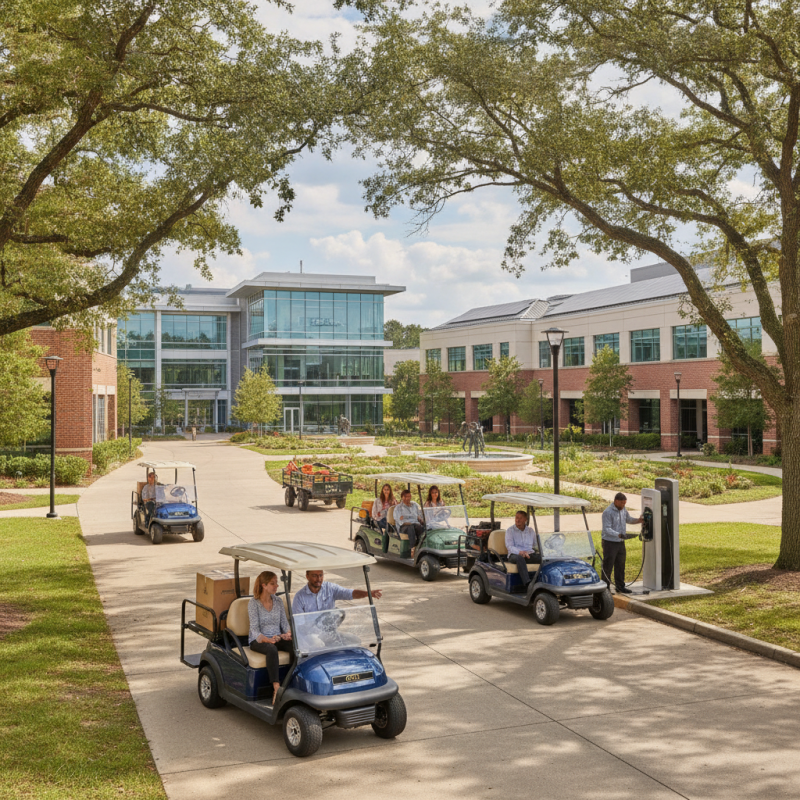
Golf carts are becoming a popular choice for businesses seeking efficient transportation. They provide a unique solution for moving employees and goods around large premises, such as campuses or warehouses. This mode of transport is more eco-friendly than traditional vehicles, reducing carbon footprints effectively. Many companies find that using golf carts can improve overall productivity. Employees spend less time walking, which saves energy and increases efficiency.
Another advantage is cost savings. Golf carts generally have lower operational costs compared to larger vehicles. Maintenance is often simpler and less expensive. Businesses can transport staff or equipment quickly without the burden of high fuel expenses. Consideration should be given to the areas where golf carts will operate. Understanding the layout and traffic patterns can enhance their utility.
While golf carts offer many benefits, there can be challenges. For instance, not all employees may feel comfortable driving them initially. Training may be required, which takes time. Additionally, considerations around safety and regulations should not be overlooked. Regular assessments of how golf carts are integrated into the workflow can help in refining their use, ensuring they meet both business needs and employee comfort.
| Benefits | Description | Use Case |
|---|---|---|
| Cost-Effective | Lower operational costs compared to traditional vehicles. | Corporate campuses, large event venues. |
| Eco-Friendly | Minimal emissions, promoting sustainability. | Outdoor events, eco-conscious companies. |
| Flexibility | Can navigate through tight spaces and paths. | Warehouse operations, large retail spaces. |
| Easy to Operate | User-friendly controls requiring minimal training. | Employee transportation, golf courses. |
| Customizable | Options for branding and modifications for specific tasks. | Promotional events, delivery services. |
: Check the battery water levels monthly for optimal performance.
Inflate the tires properly to avoid safety issues. Check the tire pressure weekly.
Listen for squeaking or grinding noises, which indicate wear.
Training helps employees understand safety protocols, reducing risks and improving service.
Ignoring battery care can lead to costly repairs. Proper charging is essential.
Assess peak traffic times and adjust routes accordingly for better efficiency.
Engage employees directly to discover areas needing improvement.
Neglect can lead to unexpected breakdowns, impacting business operations.
A well-maintained cart can last up to 15 years.
Replace worn tires promptly to prevent accidents and ensure safety.
Using a golf cart for business transportation can offer numerous benefits, such as efficiency, cost-effectiveness, and the ability to navigate tight spaces easily. Understanding how to use a golf cart for business transportation involves identifying optimal situations where their use can enhance productivity, such as large corporate campuses or outdoor events. Safety considerations are essential, including proper training for employees and adherence to speed limits to ensure safe transportation.
Furthermore, maintaining your golf cart in optimal condition through regular checks and servicing is crucial for reliable performance. Best practices for integrating golf carts into company logistics include designing specific routes and establishing usage guidelines to maximize their effectiveness. By considering these factors, businesses can successfully incorporate golf carts into their transportation strategies, ultimately leading to improved operations and employee satisfaction.

 Golvaris Car