As golf courses and resorts look to enhance guest experiences, the question arises: are golf carts suitable for resorts and hotels? According to Dr. John Peterson, an industry expert in hospitality transportation, "Golf carts offer a unique blend of convenience and leisure, making them a perfect fit for upscale accommodations."
In today’s hospitality landscape, golf carts provide more than just a mode of transport. They allow guests to navigate expansive properties easily while enjoying the sun and scenery. Picture a family taking a leisurely ride after breakfast to the pool or spa. This not only enriches their stay but also fosters a relaxed atmosphere.
However, while golf carts present numerous benefits, one must consider their operational logistics and environmental impact. Some resorts might struggle with maintenance or ensuring safety. Balancing convenience with sustainability is key. Investing in energy-efficient carts could enhance their appeal while addressing concerns. Ultimately, the suitability of golf carts depends on careful evaluation of each resort's unique needs and goals.
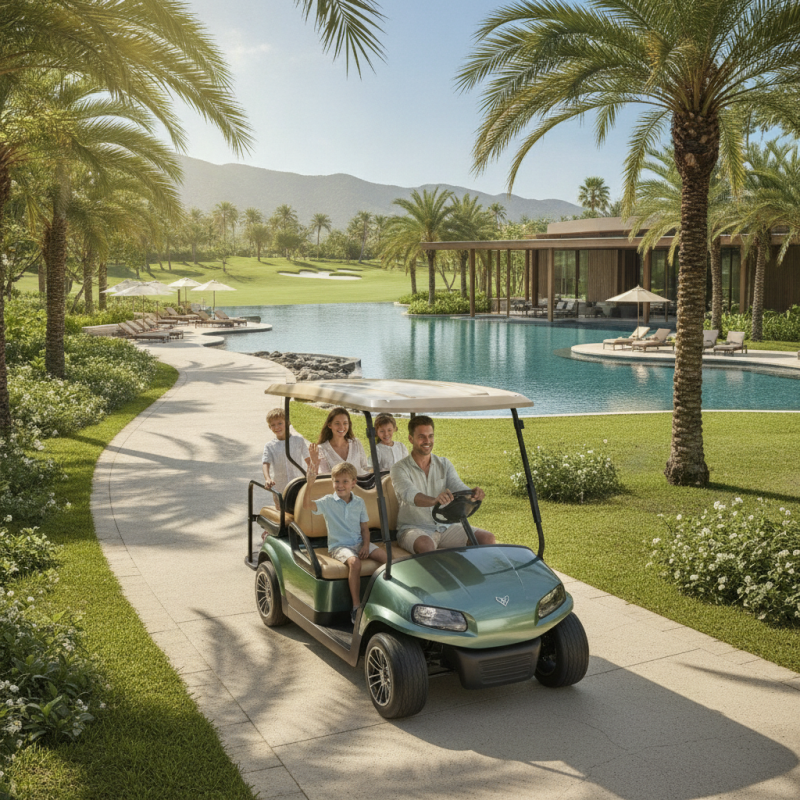
Golf carts have become a staple in resorts and hotels due to their numerous advantages. They provide quick and efficient transportation across expansive properties. Guests appreciate the convenience of hopping from their rooms to the pool or restaurant. The smooth ride enhances their overall experience, making them more likely to return.
Using golf carts boosts accessibility in these settings. Senior guests or those with mobility challenges find it easier to navigate the area. The ease of travel allows them to enjoy all the facilities without fatigue. However, some property managers may overlook regular maintenance, leading to potential issues like battery failure or flat tires.
Additionally, golf carts contribute to a quieter, more serene atmosphere. Unlike traditional vehicles, they emit less noise and pollution. This creates a peaceful environment perfect for relaxation. Yet, it's essential to strike a balance between convenience and eco-friendliness. Managers must consider sustainable practices to maximize benefits while minimizing the environmental impact.
| Benefit | Description | Impact on Guests | Environmental Impact |
|---|---|---|---|
| Convenience | Easily transport guests around the resort | Enhances guest experience and satisfaction | Lower emissions compared to traditional vehicles |
| Accessibility | Accessible for guests with mobility issues | Ensures all guests can enjoy the resort’s amenities | Promotes inclusivity without increasing carbon footprint |
| Cost-Effectiveness | Lower operational costs compared to other transport | Allows resorts to allocate budget to other guest services | Electric carts reduce fuel dependency |
| Enhanced Guest Interaction | Staff can engage more with guests during transport | Creates a friendly and welcoming atmosphere | Minimal noise pollution enhances natural ambiance |
| Flexibility | Can be used for various purposes: shuttle, events, tours | Adaptive use improves overall guest satisfaction | Efficiently utilizes space without large vehicles |
: Golf carts offer quick transportation, enhance accessibility for all guests, and create a quieter atmosphere.
They provide easy travel across large properties, allowing guests to enjoy amenities without walking long distances.
Yes, using electric golf carts can improve sustainability metrics and create an eco-friendlier environment.
Regular checks for battery issues or flat tires are crucial. Neglect can lead to guest inconvenience and dissatisfaction.
Yes, clear policies and staff training on safety protocols are essential for proper usage and guest safety.
Resorts must consider terrain and space limits that could hinder effective cart use and may struggle with maintenance logistics.
They usually incur lower maintenance costs than larger vehicles, leading to budget savings over time.
Golf carts are quieter and emit less pollution than traditional vehicles, contributing to a serene environment.
Yes, designated cart paths help maintain the landscape and improve the resort's overall appearance.
They should analyze the pros and cons, including initial investment challenges and operational feasibility.
Golf carts are increasingly becoming an essential mode of transportation in resort and hotel settings, primarily due to their numerous benefits. They enhance the guest experience by providing a convenient and enjoyable way to navigate expansive properties, ensuring that visitors can effortlessly access amenities such as pools, restaurants, and golf courses. Additionally, golf carts are cost-effective, offering hotels and resorts an economical solution for transporting guests and staff without the expenses associated with larger vehicles.
Moreover, the environmental impact of golf carts is notably positive, as they typically produce lower emissions compared to full-sized vehicles, aligning with sustainable hospitality practices. Their versatility and convenience allow resorts to streamline operations and improve service efficiency. Considering these aspects, one can confidently say that golf carts are suitable for resorts and hotels, making them a wise investment for enhancing both guest satisfaction and operational effectiveness.

 Golvaris Car