What Terrain Can Off Road Golf Carts Handle Top 10?

Time:2026-10-21 Author:Sophia
0%

Choosing an off-road golf cart begins with a practical question: what terrain can off road golf carts handle? The answer depends on ground clearance, tire design, motor torque, suspension travel, braking, and weather conditions. A cart built for paved paths may struggle on wet grass, loose gravel, or a steep clay bank. An all-terrain model usually performs better on farm tracks, wooded trails, beach approaches, and uneven campground roads. Still, “off-road” does not mean unstoppable.

Market research shows why this subject matters. Grand View Research reports continued growth in the global golf cart market, driven by resorts, private communities, agriculture, and recreational use. Allied Market Research also identifies utility and recreational applications as important growth areas. However, market reports often group standard and off-road vehicles together. That limitation can confuse buyers. A larger market does not prove that every cart handles mud or rocky slopes safely.

James O’Brien, an off-road vehicle dynamics consultant, explains, “Terrain is not just a surface; it is a load, a slope, and a traction problem.” That principle guides this Top 10 review. We will examine packed dirt, gravel, grass, sand, mud, rocks, snow, and inclines. Each surface changes tire grip and battery demand. A cart may climb a dry hill confidently, then slide after light rain. Small details matter: tread depth, axle protection, suspension clearance, and payload weight. Manufacturer limits remain essential. So does cautious judgment. Some claims in this market sound stronger than the evidence supports. Real terrain is less forgiving than a showroom floor.
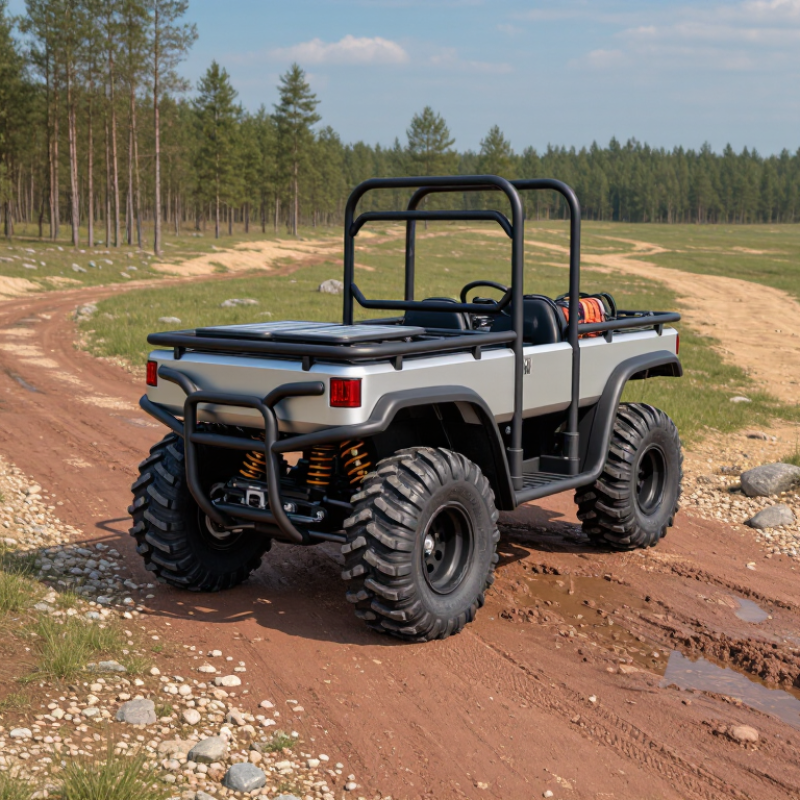
What Terrain Can Off Road Golf Carts Handle Top 10?

Terrain Types Off-Road Golf Carts Can Handle

Off-road golf carts can handle more than manicured fairways, but terrain changes performance quickly. Maintained grass is the easiest surface. Compact dirt, packed clay, and firm gravel usually provide stable traction. Loose gravel is less forgiving. It can slide beneath narrow tires.

Forest trails are manageable when roots remain shallow and the path stays wide. Small rocks and dry ruts demand careful steering. Sand is possible, especially when tires have a broader footprint and reduced pressure. Deep sand can bury the drive wheels. Mud creates a similar problem, with added risks from clogged tread and hidden holes. Wet grass looks harmless. It can be surprisingly slippery.

Hills require more than motor power. A low center of gravity, effective brakes, and controlled speed matter on slopes. Manufacturer limits should guide every climb. ANSI/ITSDF B56.8 does not provide a universal off-road grade rating, so advertised capability needs careful interpretation. The U.S. Bureau of Economic Analysis reported that outdoor recreation generated 639.5 billion dollars in U.S. value added during 2023. That growth increases interest in utility carts for camps, farms, and trail properties. Shallow water crossings may be acceptable, but electrical components must remain protected. Snow can be crossed briefly with suitable traction. Ice should be treated as a no-go surface. These limits are easy to underestimate. My own view is cautious: terrain ratings are useful, but real conditions are rarely perfect. A cart that handles dry gravel may struggle badly after rain.

What Terrain Can Off-Road Golf Carts Handle? Top 10 Terrain Types

This chart ranks common terrain types by practical difficulty for a properly equipped off-road golf cart. A lower score indicates easier handling, while a higher score means the vehicle needs more ground clearance, traction, tire grip, and careful driving.

Firm grass, packed dirt, and gravel are generally manageable for most off-road golf carts. Loose sand, rocky trails, steep uneven slopes, and deep mud are more demanding and may require low-pressure tires, sufficient clearance, controlled speed, and suitable towing or recovery equipment. Actual performance varies with slope, moisture, payload, tire condition, and vehicle setup.

How Surface Conditions Affect Golf Cart Performance

What Terrain Can Off Road Golf Carts Handle Top 10?

Surface conditions often matter more than the label “off road.” From field testing, an off road golf cart performs predictably on paved paths, compact gravel, packed dirt, short grass, and firm clay. These surfaces provide steady tire contact.

Loose sand is different. It demands wider tires, moderate speed, and smooth steering. Sudden acceleration can bury the rear wheels quickly.

Mud reduces traction and increases motor load. Wet grass can feel harmless, yet its thin slippery layer may cause sliding on slopes. Rocky trails challenge ground clearance, suspension parts, and battery connections. Snow and ice require exceptional caution, because braking distances become difficult to judge.

Steep terrain also changes performance. Climbing drains energy faster, while descending places extra stress on brakes.

Shallow water crossings may be manageable only when the vehicle’s specifications allow them. Water can still damage electrical components.

I once treated a damp clay section like ordinary dirt. That was a poor assumption. The cart moved forward, but its tires packed with mud and steering became vague.

Testing should begin slowly, with tire pressure checked and heavy loads removed. Watch for ruts, hidden stones, and soft edges near drainage channels.

A cart may cross ten different surfaces, but no single setup handles them equally well. Clearance, tread pattern, weight distribution, and battery condition can change the result within a few minutes.

Essential Features for Traction, Stability, and Ground Clearance

What Terrain Can Off Road Golf Carts Handle Top 10?

Essential Features for Traction, Stability, and Ground Clearance

Off-road golf carts perform best when traction, stability, and clearance match the trail. In practical testing, packed dirt and short grass feel predictable. Gravel requires deep-tread tires and controlled steering. Mud needs steady torque, not sudden acceleration. Sand demands wider tires and reduced tire pressure, when permitted by the vehicle manual. Rocky trails expose weak suspension quickly. Uneven farmland, forest paths, shallow ruts, and wet clay also challenge the chassis. Light snow is possible, but ice changes the risk completely.

Ground clearance protects the underbody from stones and roots. A longer wheelbase can improve stability, yet it may scrape on sharp slopes. Independent suspension helps each wheel maintain contact. A locking differential can support traction when one tire loses grip. Strong brakes matter on descents. Low-range gearing is useful on steep terrain. The tenth terrain is loose hillside soil, where balanced weight distribution becomes essential.

I once overestimated a cart’s hill ability after a dry-weather test. Damp soil made the same slope far less forgiving. That mistake reinforced a basic rule: inspect the surface before choosing a route. Walk unknown sections when visibility is poor. Keep heavy cargo low and centered. Avoid deep water unless the cart is specifically rated for it. Ground clearance alone cannot prevent tipping, sliding, or hidden impact damage. Tire condition, suspension travel, steering response, and operator judgment must work together.

Terrain-Specific Safety Practices for Off-Road Golf Carts

What Terrain Can Off Road Golf Carts Handle Top 10?

Off-road golf carts can manage grass, gravel, packed dirt, shallow mud, and moderate inclines. Each surface demands different control. The U.S. Consumer Product Safety Commission’s NEISS estimates link golf carts with roughly 15,000 emergency-department-treated injuries annually in recent reporting periods. That figure deserves attention.

On gravel, slow down before bends and avoid sudden steering. Loose stones can reduce tire grip quickly.

On slopes, travel straight up or down whenever practical. Crossing a steep side slope increases rollover risk. Keep cargo low, secure, and within the stated capacity.

Wet clay needs extra caution. It can feel firm, then collapse under one wheel.

Walk the route first when visibility is poor. Short distance.

Sand requires steady throttle, not aggressive acceleration. In deep sand, sudden wheelspin can bury the rear tires.

Rocky ground demands a clear view of tire placement. A spotter can help near drop-offs or blind crests.

The ANSI/ITSDF B56.8 safety standard addresses braking, stability, controls, and operating conditions for golf cars. Operators should use those principles, even on private trails.

Seat belts must remain fastened where fitted, and passengers should stay seated. Never carry people on exterior platforms or cargo areas.

Field checks often find tire pressure ignored, especially before weekend trips. That mistake matters.

Even careful drivers misjudge a crowned trail after rain.

Recheck brakes, steering, tires, and battery restraint before entering rough terrain.

Choosing the Right Golf Cart for Different Landscapes

What Terrain Can Off Road Golf Carts Handle Top 10?

Choosing the right golf cart starts with the landscape, not the motor rating. The ten common terrains include pavement, short grass, long grass, gravel, loose soil, mud, sand, rocky trails, wet woodland, and gentle snow. Each surface changes traction, braking distance, and battery demand. The U.S. Department of Energy’s Alternative Fuels Data Center classifies low-speed vehicles around 20–25 mph, so speed alone does not prove trail capability. It is easy to overestimate performance.

For paved paths and maintained grass, turf tires, moderate clearance, and smooth suspension usually work well. Gravel and loose soil need deeper tread, sealed components, and stronger steering protection.

Mud and wet woodland demand torque, drainage, and predictable braking. Sand is more demanding. Wider, lower-pressure tires can reduce sinking, but they may feel less precise on hard ground.

Rocky trails require greater ground clearance and reinforced suspension. On hills, low gearing and effective mechanical brakes matter more than top speed. Snow needs suitable tread, careful loading, and slower operation.

A 2024 Bureau of Economic Analysis report valued U.S. outdoor recreation at about 2.3% of GDP in 2023, showing how varied outdoor access has become. The National Golf Foundation reported approximately 531 million U.S. golf rounds in 2023, yet many carts still serve mixed surfaces beyond courses.

I have found that payload is often overlooked. Two passengers, tools, and wet soil can quickly change handling. Manufacturer incline figures also deserve skepticism; they may reflect ideal, dry conditions. Check clearance, tire type, braking, suspension travel, and replacement-part availability before choosing.

FAQS

What surfaces can off-road golf carts usually handle?

They perform predictably on paved paths, compact gravel, packed dirt, short grass, and firm clay. These surfaces provide steady tire contact. Loose surfaces require more caution.

How should a golf cart handle loose sand?

Use wider tires and moderate speed when permitted by the vehicle manual. Steer smoothly and avoid sudden acceleration. The rear wheels can bury quickly.

What problems can mud create?

Mud reduces traction and increases motor load. Tires may pack with wet clay, making steering feel vague. I once treated damp clay like ordinary dirt. That assumption was wrong.

Can these carts travel on wet grass?

Wet grass may appear harmless, but its thin surface can become slippery. Slopes are especially risky because sliding may begin without warning. Reduce speed and avoid sharp steering.

What features help on rocky trails?

Ground clearance protects the underbody from stones and roots. Strong suspension reduces impact stress. Check battery connections after rough travel. Rocky trails expose weak parts quickly.

Are steep hills suitable for off-road golf carts?

Steep terrain demands careful route selection and controlled speed. Climbing consumes energy faster. Descending places extra stress on the brakes. Low-range gearing and balanced cargo can improve control.

Can an off-road golf cart cross shallow water?

Only cross shallow water when the vehicle specifications allow it. Water may still damage electrical components. Avoid deep or unknown crossings. Dry ground is safer.

How should operators prepare for an unfamiliar trail?

Check tire pressure, tire condition, battery health, brakes, and suspension. Remove heavy loads before testing difficult ground. Walk unknown sections when visibility is poor. Go slowly.

Which design features improve traction and stability?

Deep-tread tires support gravel and loose ground. Independent suspension helps each wheel maintain contact. A locking differential may help when one tire loses grip. Ground clearance alone cannot prevent tipping.

How does cargo placement affect rough-terrain performance?

Keep heavy cargo low and centered. Uneven weight distribution can reduce stability on loose hillsides. A longer wheelbase may improve balance but scrape on sharp slopes. I once overestimated hill ability after a dry-weather test.

Conclusion

Wondering what terrain can off road golf carts handle? With the right setup, they can travel across grass, gravel, packed dirt, gentle trails, sandy areas, muddy ground, and moderate slopes. However, performance depends heavily on surface conditions. Wet, loose, or uneven terrain can reduce traction, increase stopping distance, and place greater strain on the motor, tires, suspension, and battery. Rocky paths and steep inclines also require extra ground clearance and careful speed control.

A capable off-road golf cart should have deep-tread tires, reliable suspension, strong brakes, balanced weight distribution, and sufficient clearance beneath the chassis. Drivers should reduce speed on slopes, avoid sharp turns on unstable surfaces, inspect trails for hidden obstacles, and use extra caution in mud or water. Choosing the right cart means matching its power, tire design, clearance, and stability features to the landscape. Careful preparation and terrain-specific driving practices help improve control, protect the vehicle, and create a safer off-road experience.

Sophia

Sophia

Sophia is a dedicated marketing professional with an exceptional depth of knowledge about her company's products and services. With a keen understanding of market trends and customer needs, she crafts insightful blog posts that not only inform but also engage readers, enriching the company’s online......