How to Use Golf Carts on Public Roads in 2026?

Time:2026-10-23 Author:Amelia
0%

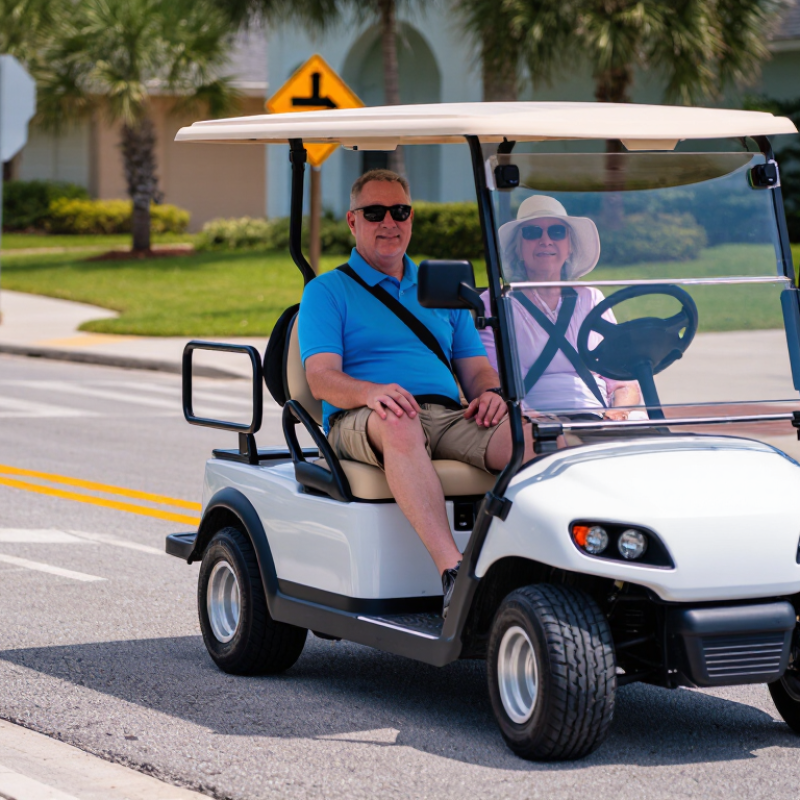
In 2026, golf carts are appearing more often near beaches, retirement communities, campuses, and small-town neighborhoods. Yet their presence does not automatically make them road-legal. The question “can golf carts be used on public roads” has no universal answer. Rules differ. Local law usually controls.

A reliable answer requires more than checking the cart’s top speed. Authorities may consider the road’s speed limit, traffic volume, vehicle classification, and permitted operating zones. Some jurisdictions require headlights, brake lights, turn signals, mirrors, seat belts, a windshield, and a vehicle identification number. Others require registration, insurance, a driver’s license, or a slow-moving vehicle emblem. These requirements can change between neighboring towns.

Before driving, check the official transportation or motor-vehicle website for the exact city, county, and state. Look for road restrictions, crossing rules, parking requirements, and seasonal limits. A cart that is accepted on a local residential street may be prohibited on a state highway. That distinction is easy to miss. Confirm the signs in person, especially near intersections and school zones. Keep documents available, and inspect the brakes, tires, lights, and battery connections before every trip.

The safest approach treats a golf cart as a small road vehicle, not a toy. Wear seat belts where provided, use visible signals, and avoid carrying more passengers than the seats allow. Even compliant equipment cannot remove every risk. Laws can be unclear, and online advice may be outdated. When uncertainty remains, contact the local authority directly. A short phone call may prevent an expensive mistake.
How to Use Golf Carts on Public Roads in 2026?

Check Whether Your Golf Cart Is Legal for Public Roads

How to Use Golf Carts on Public Roads in 2026?

Before driving a golf cart on public roads, check whether it meets your local legal requirements. Rules vary by state, county, and municipality. A cart approved for a private community may not be road-legal elsewhere. Contact your local motor vehicle agency or municipal office for current guidance. Ask about registration, insurance, driver licensing, speed limits, and approved streets. Confirm whether your cart qualifies as a low-speed vehicle or another regulated class.

Inspect the cart carefully. It may need working headlights, brake lights, turn signals, mirrors, seat belts, a windshield, reflectors, and a visible identification number. Test every light before leaving your driveway. Check the tires and brakes on a quiet surface. A clean cart is not automatically legal. I once underestimated how easily road signs disappear at dusk, so visibility deserves serious attention. Do not assume a neighbor’s setup is compliant.

Tips: Carry registration and insurance documents when required. Use roads specifically permitted for golf carts. Stay alert near parked vehicles and intersections. Keep passengers seated and within the designed capacity. Avoid carrying loose tools or bags that could fall into traffic. Check official local websites before each season, because transportation rules can change. Online summaries may be outdated, and that small detail can matter.

Learn the Road Rules and Local Golf Cart Requirements

In 2026, a golf cart belongs on public roads only when local rules allow it. A golf cart is not automatically a low-speed vehicle. NHTSA guidance defines an LSV as traveling no faster than 25 mph on roads posted 35 mph or lower. It also requires equipment such as lamps, mirrors, seat belts, a windshield, and a vehicle identification number. A standard cart may not qualify. Check city, county, and state requirements before driving.

Road access is only one part of compliance. Local authorities may require registration, insurance, a licensed driver, minimum age, and daytime operation. Some communities restrict carts to marked streets or specific crossings. Others require turn signals, inspections, or slow-moving-vehicle signs. Rules can change at a city boundary. Call the local transportation office when the wording seems unclear. Online information can be outdated.

Treat the cart as a vulnerable vehicle. NHTSA’s 2023 Traffic Safety Facts recorded 40,901 U.S. traffic deaths, showing why a short trip still deserves caution. Keep right, signal early, buckle every occupant, and avoid roads above the cart’s rated speed. IIHS research explains that low-speed vehicles provide less crash protection than regular passenger cars. That weakness is easy to underestimate. Recheck brakes, steering, lights, and tire pressure before each trip. No checklist catches every local exception, so review the rules again after moving or changing routes.

How to Use Golf Carts on Public Roads in 2026? - Learn the Road Rules and Local Golf Cart Requirements

Important: Golf-cart rules are determined by state law and may be further restricted by a city, county, town, or homeowners' association. The requirements below are a practical 2026 planning guide, not a substitute for checking the current local ordinance before driving on a public road.

Public-Road Golf Cart Rules and Compliance Checklist
Location or Rule Category Where Public-Road Use May Be Allowed Typical Speed Limitation Driver and Operating Conditions Equipment or Documentation Commonly Required Primary Authority to Verify
Florida On roads designated by a municipality or county. State law generally addresses roads with posted speed limits of 30 mph or less. Golf carts are generally designed for speeds of 20 mph or less. Local authorities may impose stricter limits or prohibit use on particular roads. Use is commonly limited to daylight hours unless the cart has the lighting equipment required by law. Local rules may address minimum age, licensing, and passenger capacity. Required equipment can include brakes, steering, tires, a windshield, a rearview mirror, and approved lighting when operated at night or under local authorization. Florida Statutes §§ 320.01 and 316.212, plus the applicable city or county ordinance.
South Carolina Generally within four miles of the registered address of the owner, subject to state restrictions and local road authorization. Commonly limited to roads with posted speed limits of 35 mph or less. Operation is generally limited to daylight hours unless the golf cart meets additional lighting requirements. The driver must follow licensing and passenger rules that apply in the area. A state golf-cart permit or decal is generally required. Required safety equipment may include headlights, rear lights, brake lights, a reflector, a mirror, and a slow-moving-vehicle emblem where applicable. South Carolina Code §§ 56-1-130, 56-2-105, and 56-2-106, together with local ordinances.
Georgia On public roads authorized by a local government for golf carts or personal transportation vehicles. Authorization and signage vary by community. Personal transportation vehicles are generally designed for no more than 20 mph. Road eligibility may include roads posted at 35 mph or less, depending on the local rule. Drivers must obey traffic laws and local operating restrictions. Some communities impose additional rules for age, licensing, routes, and crossing higher-speed roads. Common requirements include functioning brakes, a steering mechanism, tires, a windshield, a rearview mirror, headlights, taillights, brake lights, and reflectors when required by the local ordinance. Georgia Code § 40-6-330.1 and the applicable city or county ordinance.
North Carolina Use depends heavily on a municipal or county ordinance. A local government may permit or restrict golf-cart operation on designated public streets. Local ordinances commonly limit use to lower-speed streets and may restrict roads with speed limits above 35 mph. Local rules may specify a minimum driver age, a valid driver's license, daylight-only operation, passenger limits, and approved crossing points. Equipment requirements are set by state law and local ordinance and may include headlights, rear lamps, stop lamps, turn signals, mirrors, a windshield, and a slow-moving-vehicle emblem. North Carolina General Statutes §§ 20-4.01 and 160A-300.6, plus the local ordinance.
Texas Golf-cart use on public roads is controlled largely by state definitions and local authorization. Cities and counties may designate roads or areas where operation is allowed. Local rules commonly focus on roads with posted speed limits of 35 mph or less. A cart operated as a low-speed vehicle may be subject to different federal and state requirements. Drivers must comply with traffic laws and any local conditions concerning routes, crossings, hours, age, licensing, and passengers. Depending on the vehicle classification and location, requirements may include a slow-moving-vehicle emblem, lamps, reflectors, mirrors, a windshield, insurance, title, or registration. Texas Transportation Code Chapter 551 and the applicable city or county ordinance.
California Public-road operation is generally limited to designated golf-cart zones or other areas established by a local authority. A golf cart is generally designed for no more than 15 mph. Local authorities determine which streets and crossings may be used. Drivers must follow the conditions of the designated zone. Local rules may establish age, licensing, route, crossing, and operating-hour requirements. Equipment can include headlights, taillights, stop lamps, reflectors, a windshield, a mirror, seat belts where required, and a slow-moving-vehicle emblem. California Vehicle Code §§ 385.5, 21115, and 21716, together with the local golf-cart-zone ordinance.
Arizona Road use depends on whether the vehicle qualifies as a golf cart, neighborhood electric vehicle, or another street-legal classification, as well as local restrictions. Golf-cart and neighborhood-electric-vehicle rules can differ. The posted road speed and the vehicle's certified design speed determine whether use is lawful. Operators must comply with traffic laws and any local rules. A vehicle that exceeds the legal golf-cart definition may need to meet broader motor-vehicle requirements. Depending on classification, requirements may include registration, insurance, headlights, brake lights, turn signals, mirrors, a windshield, seat belts, and a vehicle identification number. Arizona Revised Statutes Title 28 and the applicable city or county transportation ordinance.
Nevada Use is generally limited to roads or areas authorized by a local government. Local rules may identify specific streets, crossings, and operating zones. Speed restrictions depend on the local authorization and the vehicle classification. Higher-speed roads are commonly excluded. Local authorities may regulate driver age, licensing, hours of operation, passenger capacity, and the distance a cart may travel from an authorized area. Equipment, registration, insurance, and inspection requirements depend on whether the vehicle remains a golf cart or is classified as a street-legal low-speed vehicle. Nevada Revised Statutes Title 43 and the applicable local ordinance.
Any U.S. Location: Road-Speed Check Before entering a public road, confirm that the exact street is included in a designated golf-cart route or zone. Do not rely only on the cart's maximum speed. The posted speed limit, local authorization, and vehicle classification must all be compatible. Avoid roads with heavy traffic, limited visibility, narrow shoulders, or no safe crossing point unless the law expressly permits the route. Confirm whether warning signs, lights, mirrors, turn signals, seat belts, insurance, registration, or a slow-moving-vehicle emblem are required. Municipal or county transportation department, police department, clerk's office, or official code database.
Any U.S. Location: Driver Compliance Operate only within the geographic area and on the streets permitted by the applicable law or ordinance. Maintain a safe speed below the posted limit and below the cart's safe operating capability, especially near pedestrians and intersections. Carry only the number of passengers for whom seating and restraints are provided. Never allow passengers to stand on rear platforms or hang from the vehicle. Carry proof of registration, permit, insurance, or authorization when local law requires it. Keep the vehicle's safety equipment in working order. State motor-vehicle agency and the local government that controls the road.
Any U.S. Location: Night Driving Nighttime use is often prohibited unless the golf cart has the equipment required by state or local law. Use extra caution because golf carts are smaller and less visible than standard vehicles. Use headlights and rear lamps from sunset to sunrise or whenever visibility is poor, if permitted by the local rule. Common equipment includes headlights, taillights, brake lights, reflectors, a rearview mirror, and a windshield. Some jurisdictions also require turn signals and a slow-moving-vehicle emblem. State equipment statute and the local golf-cart ordinance.
Any U.S. Location: Road-Crossing Safety Cross only at locations permitted by state or local law. A legal route may still require a marked crossing or an intersection controlled by traffic signals. Stop completely, check both directions, and cross only when there is sufficient visibility and time to clear the road. Yield to pedestrians and follow traffic signals, stop signs, lane markings, and right-of-way rules. Use working brake lights, reflectors, mirrors, and turn signals where required. Do not carry loads or passengers that obstruct the driver's view. State traffic code, local road map, and municipal or county crossing rules.

Prepare the Golf Cart With Required Safety Equipment

How to Use Golf Carts on Public Roads in 2026?

Prepare the Golf Cart With Required Safety Equipment

Before taking a golf cart onto a public road, inspect every safety feature in daylight. Local requirements differ, so check your transport authority’s current equipment list. A cart may need headlights, taillights, brake lights, turn signals, reflectors, mirrors, and a working horn. Some areas also require seat belts, a windshield, or a slow-moving-vehicle emblem.

Test the lights from several steps away. Ask another person to confirm that each signal is visible. Press the brake pedal firmly and watch for delayed stopping. Inspect the tires for shallow tread, cracks, or uneven wear. Secure the battery compartment and remove loose objects from the footwell. A clean windshield matters when rain, dust, or evening glare reduces visibility.

I once focused too much on lights and overlooked a loose mirror. That small mistake changed my inspection routine. Now, I gently check each mirror, seat belt, and mounting bolt by hand. The cart should track straight without unusual vibration. Keep a basic repair record with inspection dates and observed defects. Do not drive until a qualified technician checks serious brake, steering, or electrical problems. Equipment alone cannot replace cautious speed, visible signals, and attention to nearby vehicles.

Register, Insure, and Equip the Golf Cart Properly

How to Use Golf Carts on Public Roads in 2026?

Register, Insure, and Equip the Golf Cart Properly

Using a golf cart on public roads starts with local approval. Rules vary by city, county, and road type. Contact the transport authority or vehicle office before driving it. Ask whether registration, a vehicle identification number, inspection, or a special permit is required. Keep the registration document in the cart, not in a kitchen drawer.

Insurance matters just as much. A homeowner policy may not cover road use. Request written confirmation of liability coverage for the golf cart. Some areas also require minimum coverage limits. Never assume a policy applies because the cart is slow. That assumption can become expensive after a minor collision. I would also record the cart’s serial number, photographs, and safety equipment before registration.

Tips: Check headlights, brake lights, turn signals, mirrors, brakes, tires, seat belts, and the horn. Test everything in daylight. Replace weak batteries before a longer trip. Keep speed within the posted limit and avoid roads that local rules exclude. A reflective slow-moving-vehicle sign may be required, but confirm its placement first. Carry registration, insurance proof, and emergency contact details. Do not carry more passengers than the seats allow. A short route rehearsal can reveal blind corners and rough shoulders. My checklist is not perfect; local officials may require one extra item. That is why written confirmation beats guesswork.

How to Use Golf Carts on Public Roads in 2026?

Before using a golf cart on public roads, confirm local registration, insurance, licensing, speed-limit, and roadway rules. If the vehicle qualifies as a federal low-speed vehicle, required equipment includes lighting, visibility, braking, and occupant-protection features.

Important: The chart summarizes equipment categories associated with federal low-speed vehicle standards, including lamps, reflectors, mirrors, windshield requirements, parking brakes, and seat belts. A vehicle that meets these standards may still need state or local registration, liability insurance, a valid driver’s license, a vehicle identification number, and additional state-specific equipment before it can legally operate on public roads.

Drive Safely and Legally on Public Roads in 2026

How to Use Golf Carts on Public Roads in 2026?

Driving a golf cart on public roads requires more than confidence and a charged battery. Rules differ by country, state, and municipality. Check your local transport authority before entering traffic. Some roads may require registration, insurance, lighting equipment, mirrors, seat belts, or a restricted speed rating. A cart designed for a private course may not meet public-road standards. Never assume permission because another driver uses one nearby.

Tips: Inspect brakes, tires, lights, mirrors, and steering before every trip. Wear a seat belt where fitted. Keep both hands available for steering. Follow posted speed limits and stay alert near intersections. Use reflective clothing after dark when local rules allow nighttime travel. Avoid highways and roads with fast-moving traffic unless officials clearly permit them.

Plan a short route first. Choose streets with lower speeds, clear shoulders, and good visibility. Signal early, and check behind you before turning. Pedestrians, bicycles, and larger vehicles can disappear from a cart’s blind area quickly. Weather also matters; rain can reduce braking control and visibility. I once found a familiar route surprisingly stressful during heavy traffic, so confidence should not replace preparation. If the cart feels unstable, underpowered, or difficult to control, leave the road safely and arrange another legal option.

FAQS

What safety equipment may a golf cart need for public-road use in 2026?

Requirements vary locally. Common items include headlights, taillights, brake lights, turn signals, reflectors, mirrors, and a working horn. Seat belts, a windshield, or a reflective emblem may also be required.

How should I inspect the cart before driving?

Inspect it in daylight. Test every light from several steps away. Ask someone to confirm each signal is visible. Check brakes, tires, mirrors, belts, bolts, and the battery compartment.

What tire and brake problems should stop a trip?

Do not drive with cracked tires, shallow tread, uneven wear, or delayed stopping. Serious brake, steering, or electrical problems need qualified attention. Safety equipment cannot fix mechanical defects.

Do I need registration or a permit?

Ask the local transport or vehicle office. Requirements may include registration, a vehicle identification number, inspection, or a special permit. Keep the registration document inside the cart.

Does ordinary household insurance cover road use?

Not always. Request written confirmation of liability coverage. Some areas require minimum coverage limits. A slow cart can still cause costly damage during a minor collision.

What documents and records should I carry?

Carry registration, insurance proof, and emergency contact details. Record the cart’s serial number, photographs, inspection dates, and observed defects. A paper checklist can prevent memory gaps.

How many passengers can the cart carry?

Carry no more passengers than the available seats allow. Everyone should use the provided seat belts. Loose objects should stay out of the footwell.

How can I choose a safer route?

Keep within the posted speed limit. Avoid roads excluded by local rules. Rehearse a short route and note blind corners, rough shoulders, rain glare, and evening visibility. My checklist is not perfect. Written local guidance remains important.

Conclusion

Before using a golf cart on public roads in 2026, confirm that it meets the legal standards in your area. Rules may depend on the road’s speed limit, the cart’s maximum speed, and whether local authorities permit golf carts on specific streets. Learn the applicable traffic rules and local requirements, including where carts may be driven, which crossings are allowed, and whether a special permit is needed. If you are asking, “can golf carts be used on public roads,” the answer depends on these local conditions rather than a single universal rule.

Prepare the cart with required safety equipment, such as working lights, reflectors, mirrors, seat belts, turn signals, and safety markings when required. Complete registration and obtain suitable insurance before driving, and keep all documents available. Finally, operate the cart responsibly: obey speed limits and traffic signals, stay alert, use designated lanes where available, avoid unsafe passengers or loads, and maintain a safe distance from other vehicles. Regular inspections can help ensure the cart remains road-ready throughout 2026.

Amelia

Amelia

Amelia is a seasoned marketing professional with a wealth of expertise in our company’s core offerings. With an unwavering passion for driving growth and innovation, she plays a pivotal role in shaping our marketing strategies and enhancing brand visibility. A key aspect of her responsibilities......