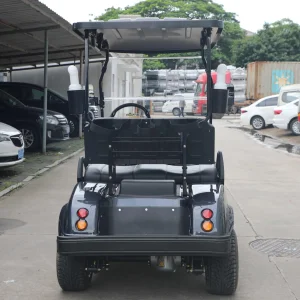
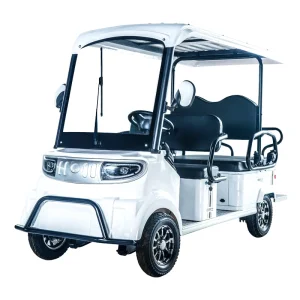
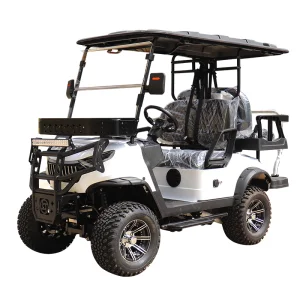
Discover our leading range of high-efficiency low-speed electric vehicles engineered with climate control for ultimate comfort.


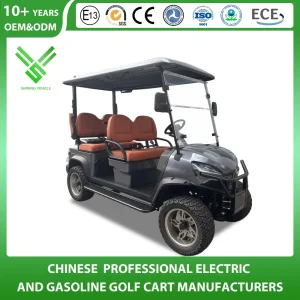
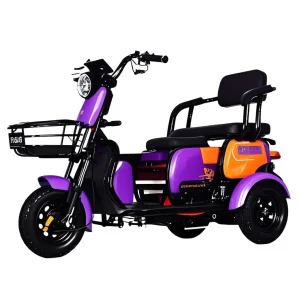
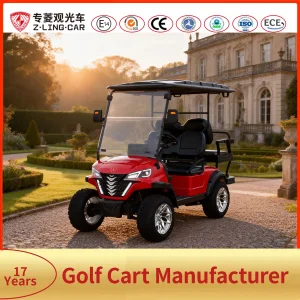
Shenzhen Golvaris Car Co., Ltd. stands at the global vanguard as a professional China EV Golf Cart Factory, mastering the rigorous engineering disciplines required to design, manufacture, and export premium-grade electric low-speed vehicles (LSVs). Operating out of China's advanced hardware synthesis clusters, Golvaris addresses an evolving enterprise market dynamic: the transition from rudimentary open-air recreational buggies to high-efficiency, fully enclosed, climate-controlled micro-mobility solutions.
By leveraging deep architectural control over vehicular electronics and structural thermal management, our company delivers an expansive ecosystem of light utility vectors. This includes smart street-legal neighborhood electric vehicles (NEVs), off-road utility transport units, and multi-passenger VIP shuttles. Our comprehensive integration of specialized automotive-grade HVAC (Heating, Ventilation, and Air Conditioning) architectures into 48V and 72V powertrains resolves a fundamental barrier in hot, tropical, or highly industrialized climates—ensuring consistent operational readiness and uncompromised operator safety.
An analytical exploration of shifting commercial procurement parameters for climate-controlled utility assets.
Rising mean temperatures in regions like the Middle East (GCC), Oceania, and the southern US Sunbelt have forced corporate campus operations to abandon traditional open-sided buggies in favor of fully climate-controlled enclosed hulls to secure staff safety and client satisfaction.
Modern heavy industry, chemical storage plants, and deep-sea mining ports are elevating Health, Safety, and Environment (HSE) protocols. Enclosed, filtered-air cabins protect human capital from environmental particulates, particulate matter, and acoustic stress during extended shifts.
Ultra-luxury hospitality assets require continuous cold-chain customer movement profiles. Uninterrupted thermal management during transit between landing zones, villa domains, and recreational spaces preserves premium service integrity for five-star global operations.
From an optimization standpoint, "user intent mining" within B2B industrial procurement queries reveals a significant search shift. Volume is trending away from generic "golf carts" toward precise semantic expressions such as *“low-speed fleet vehicles with integrated HVAC”*, *“enclosed 48V electric personnel carriers”*, and *“OEM lithium utility buggies for extreme heat”*. Global purchasing officers are prioritizing structural longevity and component insulation over nominal cost metrics. This structural shift underpins the requirement for sophisticated manufacturing execution, a competency that Shenzhen Golvaris has built directly into its core assembly protocols.
How Shenzhen Golvaris solves the high-energy penalty of cooling low-voltage electric powertrains.
Integrating an operational HVAC system into an electric vehicle with limited battery capacity requires a significant departure from standard internal combustion engine (ICE) parasitic cooling loops. Traditional lead-acid batteries fail under the sustained current draws required by DC scrolls and hermetic compressors. Golvaris resolves this challenge by utilizing premium Lithium Iron Phosphate (LiFePO4) cell topologies integrated with customized smart Battery Management Systems (BMS).
Our engineering matrix treats the cabin structure as a comprehensive thermal zone. By utilizing double-walled insulated rotomolded thermoplastic panels or lightweight aluminum framework structures matched with UV-reflective solar glass compounds, we significantly lower the cabin's thermal load. The integrated variable-frequency compressor modulates its draw based on micro-climatic internal readings, preserving driving range while delivering immediate cooling effects upon operator ingress.

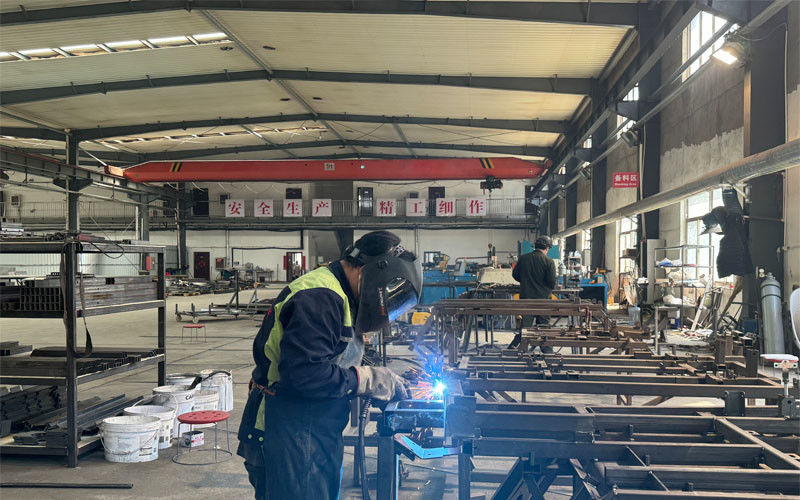
The manufacturing superiority of a premier China EV Golf Cart Factory like Shenzhen Golvaris does not merely stem from assembly-line labor efficiency. It is rooted in complete vertical integration within China's industrial ecosystem. From advanced brushless AC motor fabricators to structural chassis precision extrusion mills, our supply chain guarantees strict component quality control and rapid prototyping turnaround times.
Furthermore, our rigorous implementation of international testing protocols separates us from low-tier regional assemblers. Every air-conditioned golf cart variant undergoes intense environmental chamber validation, structural vibration testing, and high-voltage dielectric isolation checks to meet global compliance mandates (DOT, CE, EEC, and ISO 9001). This vertical integration translates into a highly optimized cost structure, allowing us to pass significant savings and exceptional build value to institutional clients via our agile OEM and ODM production frameworks.
| Engineering Vector | Golvaris Standard Parameters | Operational Advantage |
|---|---|---|
| Powertrain Input | 48V / 72V High-Efficiency AC Brushless Motor | Optimized torque conversion, zero field maintenance. |
| Battery Integration | Smart LiFePO4 with active balancing CAN-bus BMS | Extended lifespan, 3x performance vs lead-acid. |
| HVAC System Capacity | 8,000 - 12,000 BTU Variable DC Compressor | Rapid interior cooling without voltage dropouts. |
| Chassis Engineering | Anti-corrosive Hot-Dip Galvanized Structural Steel | Withstands high coastal salinity and humid resorts. |
Examining customized deployment configurations across diverse geographic and structural landscapes.
Operating across island terrains like the Maldives, Caribbean basins, and Southeast Asian enclaves. Our premium enclosed carts provide incoming VIP guests a transition zone from air-conditioned terminals to villa sites without exposure to oppressive exterior humidity.
For heavy manufacture complexes, refineries, and airport tarmacs where personnel must navigate sprawling footprint coordinates. Sealed, climate-controlled interiors mitigate occupational heat fatigue, driving up labor productivity indices and safety metric scores.
Designed for retirement communities, institutional campuses, and perimeter municipal safety enforcement. Operates silently at 30 MPH via high-torque lithium drive configurations, offering year-round weather-proof monitoring capabilities and rapid deployment profiles.
The strategic roadmap for the next generation of low-speed electric transport elements centers on three critical technical pillars: intelligent vehicle telemetry (IoT), integrated solar energy harvesting, and composite material mass reduction.
Shenzhen Golvaris is actively embedding smart fleet management systems into its high-end export units. These telemetry arrays stream real-time diagnostic performance metrics—including specific state-of-health (SoH) battery cell statistics, current thermal HVAC performance, and geofenced mapping arrays—directly to administrative dashboards. This gives fleet managers complete transparency over asset utilization and predictive maintenance windows.
Furthermore, our research division is integrating high-efficiency thin-film monocrystalline solar roof laminates directly into our enclosed hardtop shell assemblies. These solar arrays convert ambient irradiance into a supplemental charging trickle, offsetting the baseline power draw of the HVAC blower fans and expanding field range parameters by up to 15% under optimal solar exposure. Combined with a systematic shift toward lightweight, recyclable carbon-composite structural elements, Golvaris continues to redefine the eco-friendly transport landscape.
Key criteria global purchasing managers must evaluate when choosing an industrial electric vehicle supplier.
When executing an enterprise-level sourcing campaign for an air-conditioned golf cart fleet, global buyers should look past nominal base pricing and closely evaluate several critical engineering and operational vectors:
Expert technical engineering answers regarding procurement, configuration, and operation.
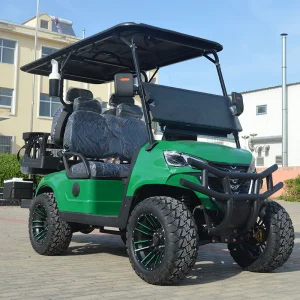
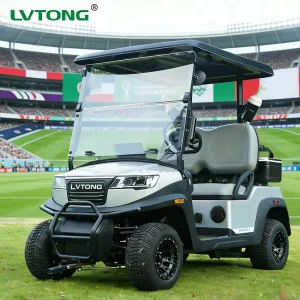
Review our complete product matrix engineered for institutional operations, VIP transport, and rugged utility roles.


 Golvaris Car