Modern commercial operations demand a paradigm shift in decentralized logistics and passenger transport. The transition from legacy internal combustion utility runabouts to multi-purpose electric vehicles (MPEVs) is no longer a concession to environmental aesthetics—it is a rigorous strategy to lower Total Cost of Ownership (TCO), secure grid compatibility, and ensure localized low-speed compliance. From complex manufacturing corridors in Shenzhen to multi-site hospitality hubs in Florida or golf properties in Algarve, decision-makers are re-evaluating their logistics assets to build resilient, flexible fleets.
This industry analysis clarifies the manufacturing landscape, details engineering integration platforms, and offers an evaluation matrix for international procurement managers. By focusing on supply chain capabilities, modular battery options, and localization parameters, we provide the technical criteria needed to purchase utility fleets directly from global hub factories.
High-efficiency custom configurations built for multi-site municipal, resort, and commercial applications.
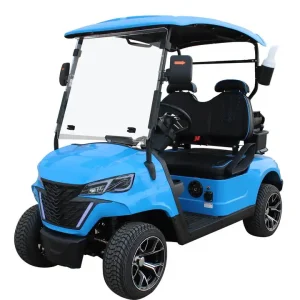
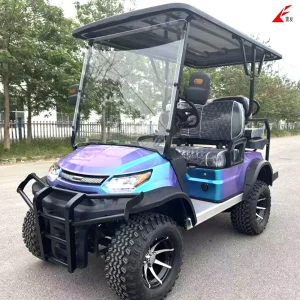

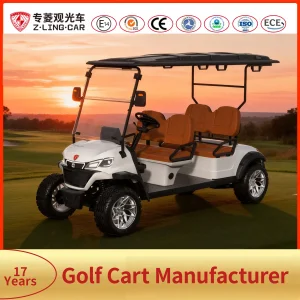
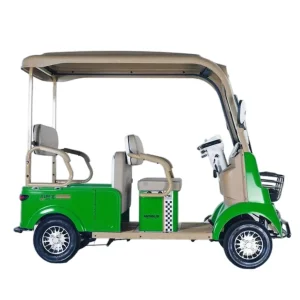
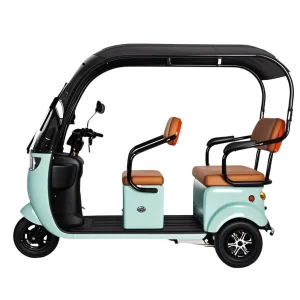

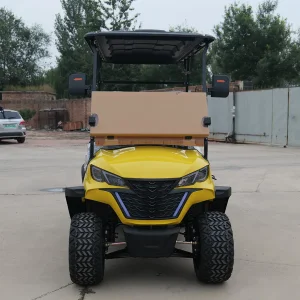
Shenzhen Golvaris Car Co., Ltd. is a leading China EV Golf Cart Factory specializing in the design, manufacture, and export of high-performance electric vehicles. With a strong focus on innovation and reliability, Golvaris delivers a full range of solutions, including lithium battery golf carts, street-legal low-speed vehicles (LSVs), and off-road electric golf carts tailored for diverse global applications.
Backed by an experienced engineering team and advanced production facilities, the company integrates cutting-edge lithium battery technology to ensure longer driving range, faster charging, and reduced maintenance costs. Golvaris products are widely used in golf courses, resorts, residential communities, campuses, industrial parks, and tourism destinations worldwide.
Committed to quality and international standards, all vehicles are manufactured under strict quality control systems. They can be customized to meet different market regulations and customer requirements. From 2-seater to 6-seater configurations, as well as utility and specialty models, Golvaris provides flexible OEM and ODM services to global partners.
Driven by the vision of sustainable mobility, Shenzhen Golvaris Car Co., Ltd. continues to innovate in eco-friendly electric transportation. This helps clients achieve efficient, low-emission, and cost-effective fleet operations.
Analyzing key structural shifts, regulatory drivers, and the growing demand for commercial and industrial utility vehicles.
The global demand for multi-purpose electric carts is shifting from simple golf fleet management to specialized industrial, municipal, and commercial utility roles. Research indicates the global Low-Speed Vehicle (LSV) and utility cart market is projected to expand significantly, driven by corporate decarbonization targets and strict inner-city emission zones. Traditional logistics rely on large, diesel-fueled vehicles that are inefficient for last-mile delivery, micro-logistics, and site security. In contrast, multi-purpose electric carts offer a versatile, zero-emission alternative that operates efficiently in tight spaces.
This transition is accelerated by advances in electric drivetrains and smart battery management. Today's commercial fleets require durable vehicle frames, modular cargo arrangements, and long-range battery packs that minimize downtime. The market now features three distinct tiers: high-end luxury passenger buggies, robust heavy-duty industrial haulers, and specialized public safety vehicles. Buyers prioritize components like high-torque AC induction motors, corrosion-proof aluminum structures, and advanced hydraulic braking systems that can handle varying loads and steep terrains.

Furthermore, regional demand varies based on regulatory conditions and operational environments. North American operators focus on street-legal LSVs (compliant with DOT Title 49 CFR Part 571.500) for master-planned communities and commercial resorts. In Europe, buyers seek EEC-certified configurations (like L6e and L7e categories) that meet strict road safety standards. In the Asia-Pacific region, rapid industrialization drives the need for reliable heavy-duty utility carts to manage transport in massive manufacturing complexes, airports, and logistics hubs.
Tailoring electric vehicle design to operational needs, site layouts, and regulatory requirements.
Designed for guest transport and luggage handling, these vehicles feature quiet drivetrains, premium suspension systems, and weatherproof seating. They provide reliable, low-maintenance mobility that preserves peaceful guest environments.
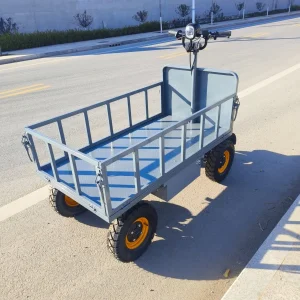
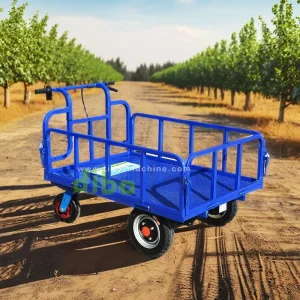
Heavy-duty flatbed carts and agricultural wheelbarrows optimized for material transport. Built with high-yield structural steel, strong torque ratios, and durable cargo beds, they streamline movement across large storage yards.
Equipped with beacons, custom lighting, and responsive braking systems, these carts support security personnel on campuses, public parks, and residential neighborhoods. They maintain clear visibility and ensure reliable control during patrols.
The progression of smart low-speed EV platforms, power management systems, and safety features.
The transition from traditional lead-acid batteries to Lithium Iron Phosphate (LiFePO4) chemistry represents a major shift in vehicle lifecycle management. LiFePO4 cells support over 3,500 charge-discharge cycles at 80% Depth of Discharge (DoD), compared to just 500 cycles for lead-acid batteries. Modern battery packs feature integrated CAN-bus-enabled Battery Management Systems (BMS) that actively monitor cell voltage, regulate temperatures, and balance cell charges. This protection prevents thermal events and extends battery life, ensuring consistent power output even at low states of charge.
Brushed DC motors are being replaced by highly efficient AC Induction and Permanent Magnet Synchronous Motors (PMSM). These advanced powertrains operate at efficiencies above 90%, reducing power loss as heat. Combined with digital motor controllers, PMSMs deliver precise torque response, which is crucial for starting on steep inclines and maintaining controlled descents with heavy loads. Eliminating carbon brushes also minimizes maintenance needs, cutting down on service labor costs.
Regenerative braking systems recover kinetic energy during deceleration and return it to the lithium battery pack, extending vehicle range by up to 15% in stop-and-go conditions. Additionally, electromagnetic auto-parking brakes automatically engage when the cart stops, preventing rollbacks on inclines and enhancing safety in busy areas like campuses, airports, and industrial spaces.
The integration of IoT modules allows fleet managers to monitor vehicle operations in real time. Features include GPS tracking, geofencing to limit speed or restrict zones, and remote diagnostics to track battery health and identify fault codes. This connectivity shifts maintenance from a reactive task to a predictive process, minimizing fleet downtime and extending overall operational life.
Why Chinese manufacturing clusters remain the benchmark for high-performance low-speed EV engineering.
The dominance of Chinese manufacturing in the global electric vehicle sector is built on concentrated industrial clusters, particularly in the Pearl River Delta and Yangtze River Delta regions. These manufacturing hubs group raw material suppliers, precision component makers, drivetrain specialists, and final assembly plants close together. This geographic concentration reduces transport times and logistics costs, allowing factories like Shenzhen Golvaris Car Co., Ltd. to rapidly prototype, iterate, and scale vehicle designs based on changing market demands.
Additionally, China's established lithium battery supply chain provides a significant cost and technology advantage. Because the country refines a large share of the world's battery materials and produces the majority of its lithium-ion cells, local manufacturers have direct access to advanced cell technologies at competitive prices. This vertical integration allows factories to offer high-quality lithium battery systems at a lower cost per kilowatt-hour than overseas competitors, passing these savings directly to B2B buyers.
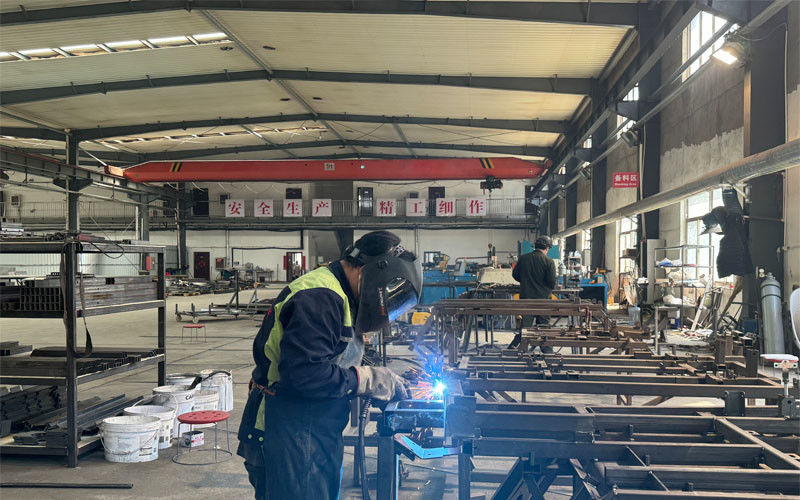
Chinese factories also utilize automated robotic welding, computerized frame alignment, and advanced test tracks to ensure consistent build quality. Vehicles undergo strict testing, including dynamometer evaluations, hill climb trials, rain chambers, and battery cycle tests. This combination of efficient manufacturing, direct access to battery technology, and rigorous quality control enables Chinese suppliers to deliver customized OEM/ODM vehicles that meet strict international regulatory standards.
Meeting regulatory requirements to ensure street-legal status and smooth customs clearance in global markets.
To operate low-speed electric vehicles on public roads, fleets must comply with regional street-legal regulations. In the United States, Low-Speed Vehicles (LSVs) are governed by the Department of Transportation (DOT) under Federal Motor Vehicle Safety Standard (FMVSS) 571.500. This regulation requires vehicles to feature key safety equipment, including three-point seat belts, DOT-approved windshields, exterior mirrors, turn signals, reflex reflectors, and a maximum speed capability of 25 mph (40 km/h). Manufacturers like Shenzhen Golvaris customize their vehicles to meet these standards, providing 17-digit VINs to simplify local DMV registration.
In the European market, vehicles must comply with EEC certifications under categories L6e (light quadricycles) or L7e (heavy quadricycles). These standards define limits for vehicle mass, speed, and motor power, while requiring specific safety certifications for headlights, braking systems, and structural integrity. Aligning designs with these regulations helps import partners avoid customs delays and ensures smooth integration into local municipal, commercial, or residential fleets.
Answers to common questions regarding fleet specification, import logistics, and operational lifecycle management.
Heavy-duty, high-capacity, and solar-assisted models designed to meet tough operational requirements.

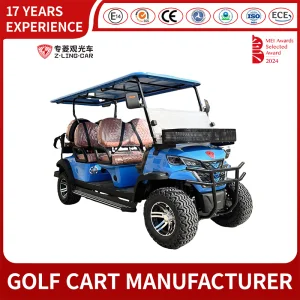
 Golvaris Car