Engineered specifically for equatorial marine climates, utilizing integrated high-efficiency PV arrays and lithium battery packs.


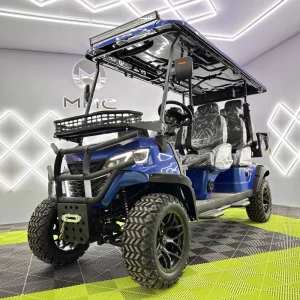
Why solar-assisted electric micro-mobility is no longer a luxury, but an ecological and economic imperative for the Republic of Kiribati.
Kiribati's unique geography, encompassing 33 coral atolls and islands scattered across 3.5 million square kilometers of the central Pacific Ocean, presents highly distinct transportation challenges. The main urban center, South Tarawa, suffers from extremely high fuel prices due to long import supply chains, combined with a fragile, diesel-reliant micro-grid infrastructure.
In this context, standard combustion vehicles and even traditional plug-in electric vehicles (which rely on diesel-generated grid electricity) fail to deliver a true ecological solution. Shenzhen Golvaris Car Co., Ltd. addresses this gap by introducing integrated solar-assisted electric golf carts and utility vehicles. By charging directly from equatorial sunlight, these vehicles bypass grid reliance, drastically lower operating costs, and directly align with Kiribati's National Energy Policy (KNEP) targets for carbon mitigation.
"The adoption of solar-powered low-speed vehicles (LSVs) in low-lying atoll nations like Kiribati minimizes the risk of coastal ground-water contamination from petroleum oil spills, while delivering autonomous mobility that functions even when fuel shipments are delayed."
Global logistics and industrial campuses are shifting rapidly toward solar-electric hybridization. In Kiritimati (Christmas Island), the tourism and research sectors require silent, non-polluting vehicles to navigate pristine coastal tracks. Golvaris vehicles combine monocrystalline solar roofing, state-of-the-art LiFePO4 (Lithium Iron Phosphate) battery chemistry, and heavy-duty, anti-corrosive structural elements designed to withstand the harsh, humid, saline conditions of the Pacific.
Tailored utility designs addressing the specific logistical realities of Pacific atolls.
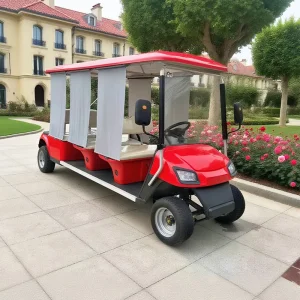
Provide guests with whisper-quiet, zero-emission transportation along the lagoons of Kiritimati and Tarawa. Integrated solar canopies continuously top-up the battery during resort operations, reducing active charging cycles.
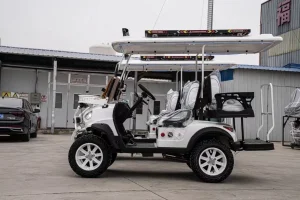
Ideal for cargo transfers, passenger transport, and administrative movement around Betio Port and Government ministries. Flat terrain allows maximum kinetic energy recovery and optimized range.
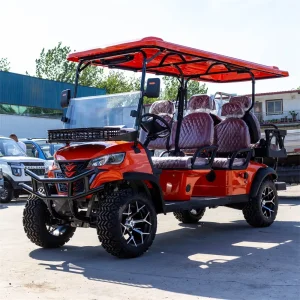
Allows outer island communities to remain mobile without relying on scarce, expensive petrol. Carts act as mobile power sources with built-in USB/DC output for charging devices during outages.
Operating electric vehicles in Kiribati demands engineering that actively combats saltwater corrosion, high ambient humidity, and extreme solar UV indices. Standard golf carts manufactured for inland environments suffer structural and electronic failure within months of exposure to coastal Pacific air.
Our solar golf carts feature a chassis options hot-dip galvanized or fabricated from high-strength marine-grade aluminum alloy. All frame welds are treated with zinc-rich anti-corrosive coatings. Suspension components, including leaf springs and shock absorbers, undergo salt-spray testing exceeding 500 hours (ASTM B117 standards) to ensure structural integrity over years of operations near sandy coastlines.
The solar panels integrated into Golvaris roofs are constructed using highly flexible, impact-resistant monocrystalline solar cells protected by ETFE (Ethylene Tetrafluoroethylene) encapsulation. Unlike standard glass panels, ETFE does not shatter under mechanical stress, exhibits superior UV degradation resistance, and retains high light transmittance even under tropical conditions. Paired with intelligent MPPT (Maximum Power Point Tracking) controllers, our solar arrays achieve up to 98% tracking efficiency, delivering up to 15-20km of additional range per day from solar energy alone.
To prevent salt crusting and moisture ingress, all vital electrical connections, controllers, and motors feature IP67-rated enclosures. Wiring harnesses are marine-grade, double-insulated, and terminated with sealed, waterproof connectors. The traction motor—available in high-torque AC configurations (up to 5000W)—is entirely brushless and enclosed, ensuring maintenance-free performance on unpaved coastal tracks.
Technical Insight: Our proprietary BMS (Battery Management System) includes thermal runaway mitigation and active cell balancing, ensuring that the lithium cells operate within optimal temperature thresholds even when parked in direct equatorial sunlight.
As battery chemistry and solar efficiencies evolve, Golvaris is actively developing technologies to further support island nations:
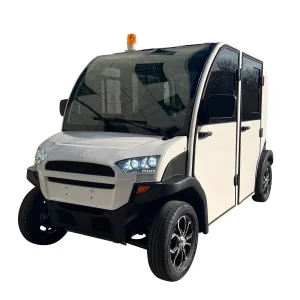
Select the configuration that best fits your passenger capacity, range, and topography requirements. Custom OEM branding and color schemes available.
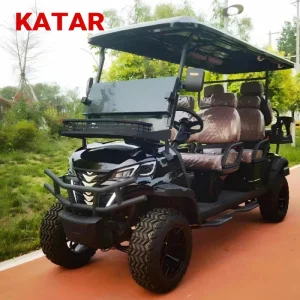

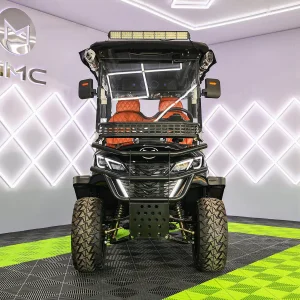
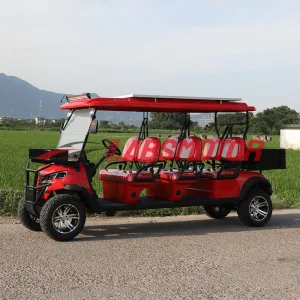
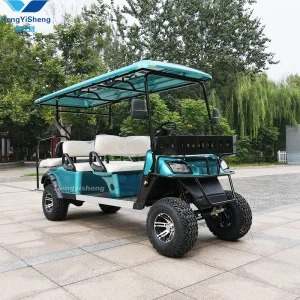

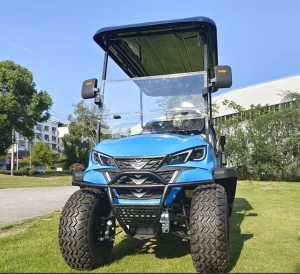
Shenzhen Golvaris Car Co., Ltd. is a professional China EV Golf Cart Factory specializing in the design, manufacturing, and export of high-performance electric golf vehicles. With a strong focus on innovation and reliability, Golvaris delivers a full range of solutions including lithium battery golf carts, street legal low-speed vehicles (LSVs), and off-road electric golf carts tailored for diverse applications.
Backed by an experienced engineering team and advanced production facilities, the company integrates cutting-edge lithium battery technology to ensure longer driving range, faster charging, and reduced maintenance costs. Golvaris products are widely used in golf courses, resorts, residential communities, campuses, industrial parks, and tourism destinations worldwide.
Committed to quality and international standards, all vehicles are manufactured under strict quality control systems and can be customized to meet different market regulations and customer requirements. From 2-seater to 6-seater configurations, as well as utility and specialty models, Golvaris provides flexible OEM and ODM services to global partners.
Driven by the vision of sustainable mobility, Shenzhen Golvaris Car Co., Ltd. continues to innovate in eco-friendly electric transportation, helping clients achieve efficient, low-emission, and cost-effective mobility solutions.
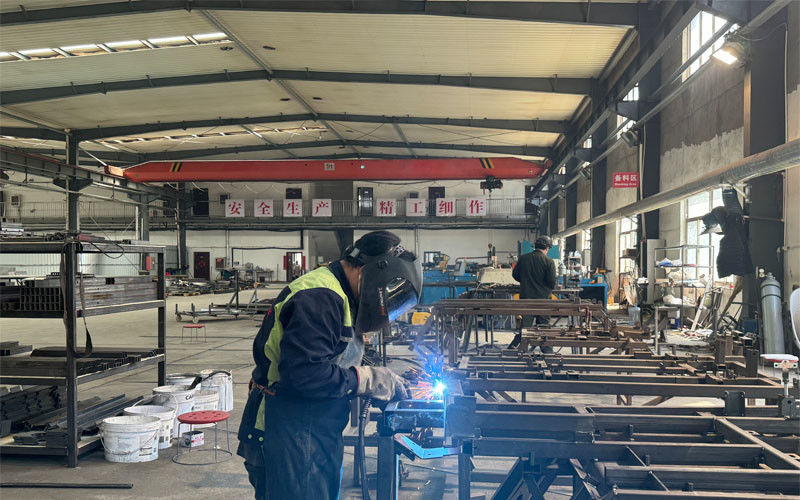

Shipping vehicles to Pacific islands requires careful coordination, structural securing, and proper compliance documentation. Shenzhen Golvaris Car Co., Ltd. has established standardized logistical pathways directly to Betio Port (Tarawa) and London Port (Kiritimati).
To shield the vehicles from marine air and salty conditions during transit, each golf cart is enclosed in an anti-static, moisture-proof protective cocoon before being secured in iron frame racks. We ship in closed GP containers, ensuring your vehicles arrive in mint condition, ready for commissioning.
Our solar and electric carts comply fully with CE and international low-speed vehicle (LSV) frameworks. We coordinate directly with local consignees and logistics brokers to provide comprehensive customs documents, certificates of origin, and battery safety MSDS reports to streamline clearance processes.
Every bulk shipment to Kiribati includes a pre-packaged supply of essential replacement components (such as tires, brake pads, relays, and solar charge fuses) ensuring that your operational downtime remains minimal, even in remote atoll clusters.
Answers to technical and logistical inquiries regarding solar-assisted micro-mobility in Kiribati.
Contact Golvaris technical sales department today for customized bulk pricing, marine-grade upgrade quotes, and optimized logistics proposals to Kiribati ports.
Send Inquiry Now Golvaris Car